
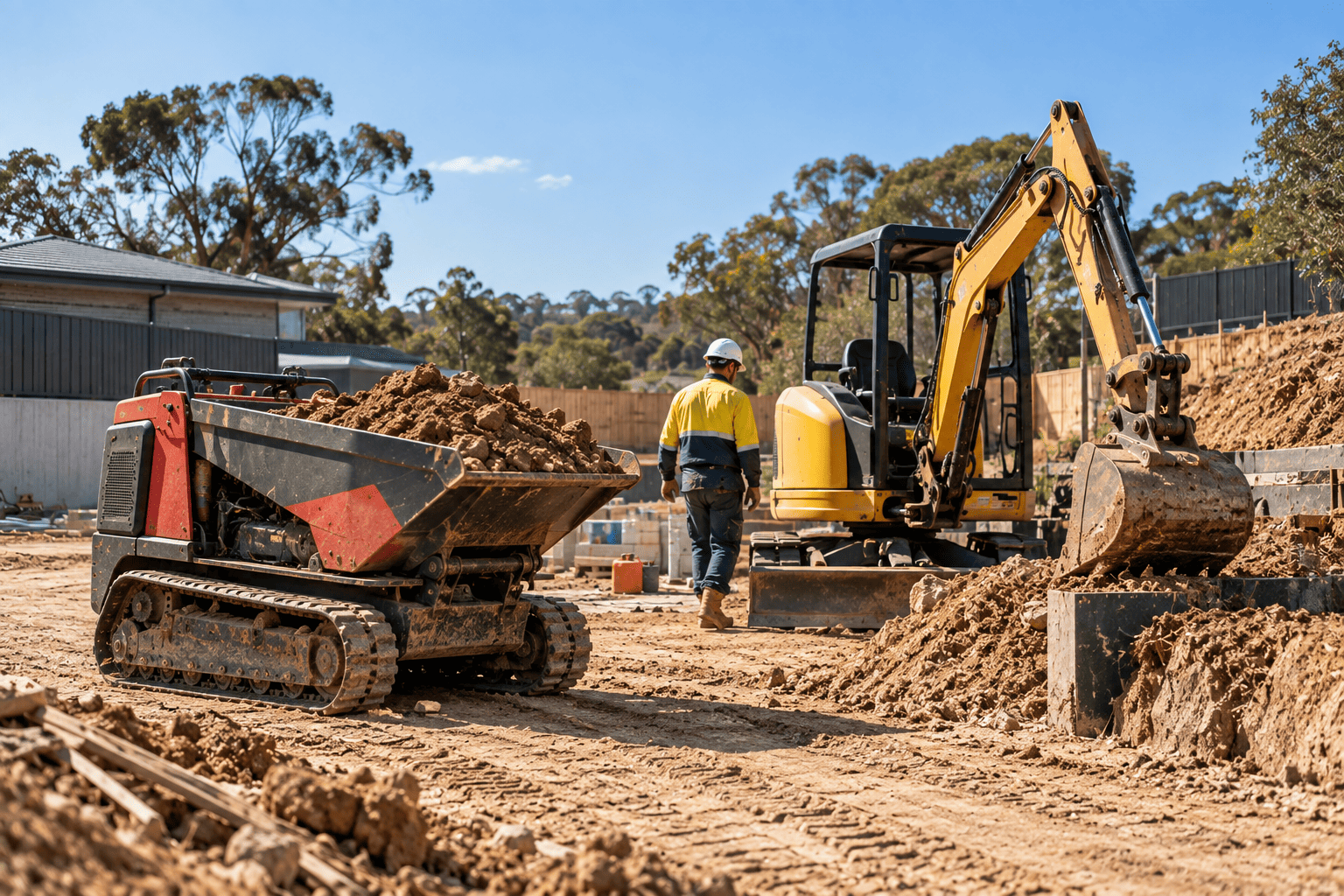
As earthmoving conditions in Western Sydney change significantly between the dry and wet seasons, it’s important to understand the know-how of preparing your site for the same. The choice of the right machinery, the timing of your project, and the ground conditions play a crucial role in site preparation, avoiding delays and equipment strain.
Ground conditions across Western Sydney shift noticeably between seasons, and those changes affect everything from machine choice to how long a job takes. Whether you are digging footings, trenching for drainage or clearing a backyard for landscaping, understanding how dry and wet conditions affect your site helps you plan a smoother, faster project.
While wet ground reduces traction and slows excavation, dry, compacted soil can make digging harder but improves site access. At Sydney West Hire, we supply mini excavators, dingo diggers and tracked dumpers for jobs across Greater Sydney throughout the year, and we regularly advise clients on the right equipment for the season they are working in.
Whether you need an excavator hire-Sydney wide for a single weekend or a longer dry hire excavator arrangement for an extended build, matching the machine to the season is one of the easiest ways to avoid delays.
Wet Season Earthmoving in Western Sydney
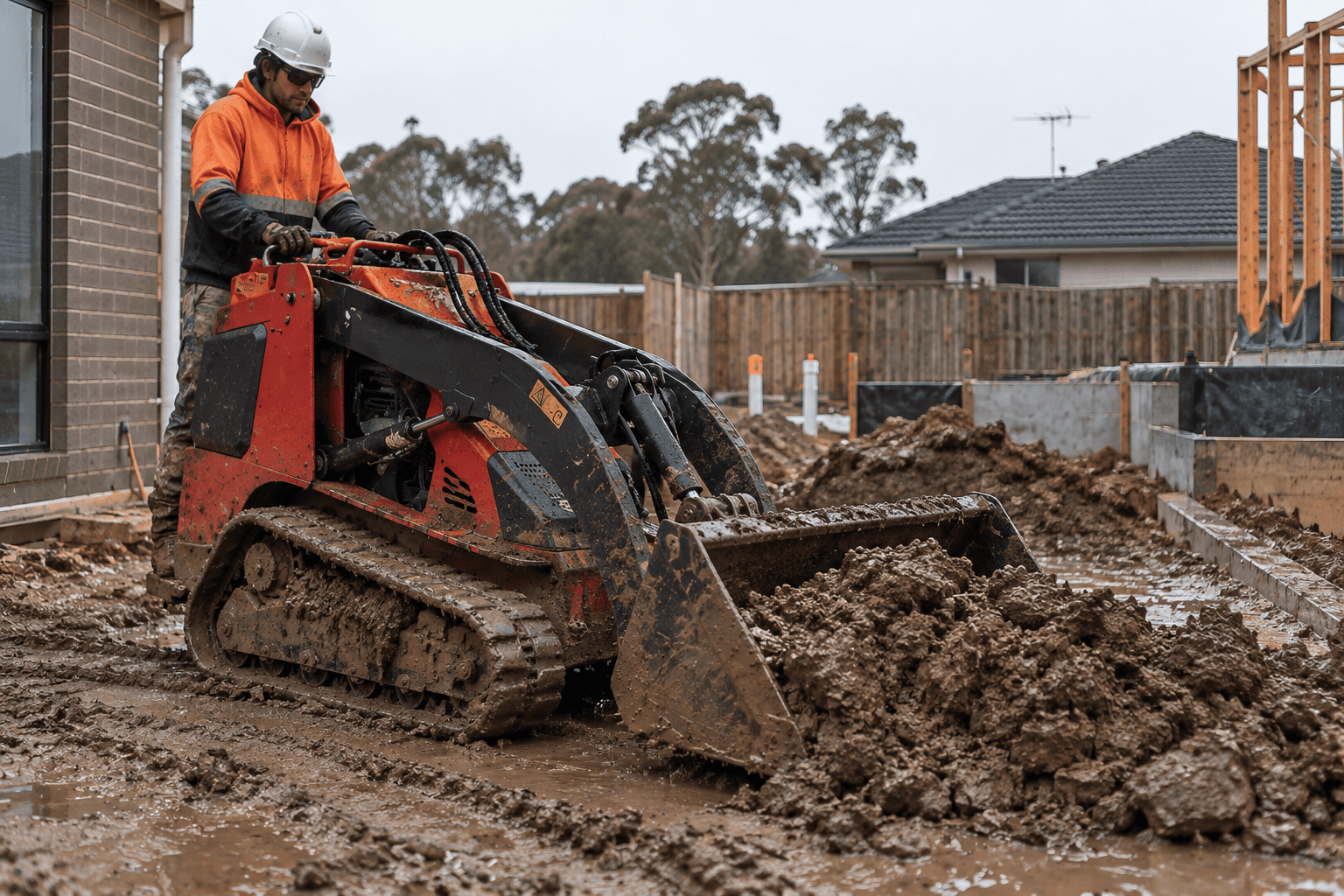
Wet season site preparation Sydney projects bring a specific set of challenges. Rain softens the ground, reduces traction for wheeled machinery and increases the risk of a site becoming inaccessible after heavy downpours.
Wet conditions are common across late summer and into autumn in Western Sydney, and they can quickly turn a straightforward job into a stalled one if the site is not set up properly.
· Tracked machinery, such as tracked dumpers and tracked mini excavators, performs far better than wheeled equipment on soft or muddy ground
· Site drainage should be assessed before work begins, so water does not pool around the work area
· Materials and spoil piles should be positioned on stable, well-drained ground to avoid them sinking or sliding
· Access paths may need temporary matting or gravel to prevent vehicles becoming bogged
Choosing tracked equipment over wheeled alternatives is one of the simplest ways to keep a wet season project moving. Tracked dumper hire bookings tend to rise noticeably during wetter months, since these machines handle soft ground far better than standard wheelbarrows or wheeled alternatives. Our team can advise on the right machine for your ground conditions when you enquire.
Dry Season Earthmoving in Western Sydney
Dry conditions bring a different set of considerations. Compacted, hard ground can be tougher to break through, particularly for trenching or footings, and dust becomes a bigger factor on site, especially near neighbouring properties.
· Compacted soil often requires more digging time and may benefit from a machine with stronger breakout force
· Dust suppression, such as light watering before excavation, keeps the site manageable and reduces complaints from neighbours
· Dry ground generally offers better access for both wheeled and tracked machinery, which can speed up material delivery and removal
· Site access Sydney projects on slopes or with reduced clearance are often easier to manage in dry conditions, since the ground holds machine weight more reliably
Dry weather generally makes for faster, more predictable earthmoving, but it still pays to plan ahead, particularly for larger excavation or trenching jobs. Dry season earthmoving Sydney projects still benefit from a site walk-through before the machinery arrives, so access and drainage points are confirmed rather than assumed.
Choosing the Right Machine for Your Ground Conditions
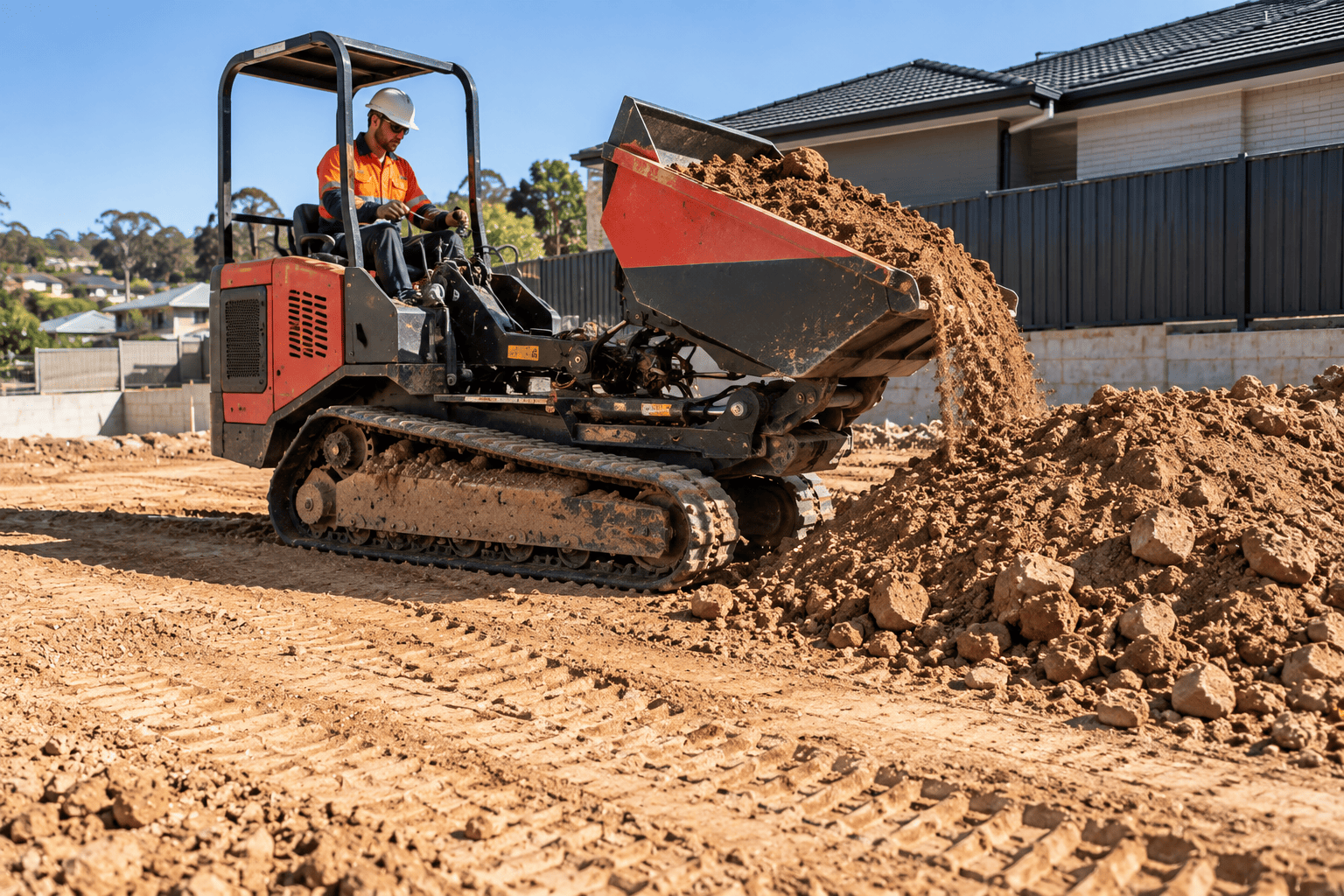
The right earthmoving machine depends on the size of your site, the access available and, just as importantly, the current ground conditions. A mini excavator suits precise digging in both seasons, while a tracked dumper becomes especially valuable in wet conditions, when moving soil or debris across soft ground would otherwise bog a wheeled machine.
For larger jobs, Western Sydney clients often pair a mini excavator hire with a tracked dumper, so digging and material removal can happen at the same pace.
As a family-owned business operating since 2018, we have supplied earthmoving equipment hire Western Sydney wide across every season, and our team can talk you through the best option for your site before you book.
Finishing Your Project
Once the earthworks are done, many clients find their driveways, paths and equipment need a proper clean before the next stage of the project begins. Our pressure washing service covers plant machinery washdown and driveway cleaning, helping you hand over a tidy site once the earthworks are complete.
Frequently Asked Questions
Do you recommend hiring earthmoving equipment during the wet season in Sydney?
Absolutely, we do recommend hiring equipment, and the only factor that changes is the type of machine. The availability does not usually change. Wet season earthworks projects in Sydney generally call for tracked equipment rather than wheeled machinery, as tracks handle soft, muddy ground with far better traction. Once you approach Sydney West Hire, our team will recommend the right machine for your site conditions and job.
Can I still use a mini excavator on a muddy site?
Yes, provided it isn’t a wheeled model but a tracked model. Tracked mini excavators distribute weight more evenly across soft ground, reducing the risk of getting bogged. Moreover, if your site has been affected by heavy rain, you should mention it when you book a hire with us or during consultation so we can confirm the most suitable machine for the conditions.
How long does an earthmoving job take in wet versus dry conditions?
Although timelines may vary by project, wet ground generally slows down the whole job due to reduced traction and the need for extra care around drainage and access. On the other hand, dry conditions tend to allow faster progress, though compacted soil can often delay the process of digging. Our team will give you a realistic estimate once we understand your site and the current ground conditions.
Do I need to prepare my site before the machinery arrives?
Yes, a clear and accessible path to the work area always helps the job start on time, regardless of season. In wet conditions, laying down matting or gravel on access routes can prevent delays. In dry conditions, light watering to reduce dust is worth considering, particularly on sites close to neighbouring properties.