

What Is A Mini Excavator?
Mini excavators are compact and powerful machines used across construction, landscaping, and residential projects. Despite their smaller size, they are incredibly versatile and are ideal for working in tight spaces where larger machinery can’t operate. Commonly used for tasks such as digging trenches, preparing foundations, landscaping, drainage work, and light demolition. They are easy to transport and relatively simple to operate, mini excavators have become a popular choice for both professionals and beginners taking on renovations or outdoor projects.
First Things First, Famillarise Yourself With The Machine
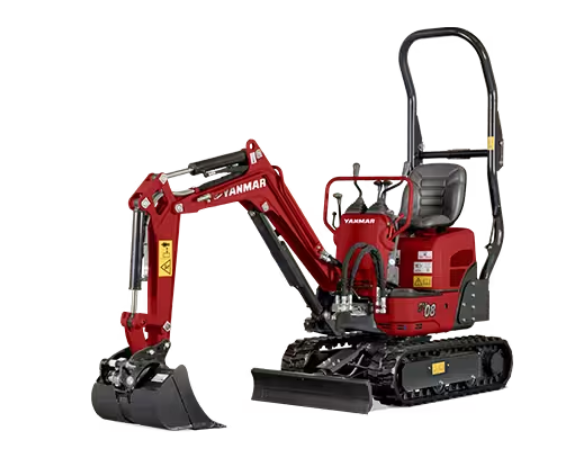
Understanding the basic components helps you stay safe.
- Cab:The operator’s space where all controls and safety features are located.
- Boom, Arm, and Bucket:The jointed digging components that handle lifting and scooping tasks.
- Tracks:The base system that provides movement and keeps the machine stable.
- Blade:A front-mounted support used for leveling ground or adding stability during operation.
- Safety Lever:A red handle on either side of the machine designed to prevent the controls from being accidentally engaged.
⚠️ Core Safety Principles For Beginners
Before anyone operates a mini excavator, these safety concepts are critical:
- Always wear proper protective equipment(helmet, boots, gloves, etc.)
- Inspect the machinebefore use for visible issues (leaks, damaged locking pins, damaged hoses, etc.)
- Understand the controls, familiarize yourself with joysticks, pedals, throttle, and safety locks before starting.
- Maintain awareness at all times, including people, slopes, and obstacles
- Follow load and machine limits, never exceed excavators lifting capacity.
- Never leave machine running unattended
- Engage safety systems, Keep the safety lever engaged when the machine is not in use.
Lets Get To Work!
🔑 Starting the Mini Excavator
Follow these steps to start the machine safely:
- Climb Into the Cab:Use the steps and handrails provided to enter the operator’s compartment safely.
- Fasten Yourself In:Adjust the seat for comfort and buckle your seatbelt.
- Engage the Safety Lock:Activate the safety lever to prevent accidental movements before starting.
- Start the Engine:Insert the key, turn it, and let the engine run at idle for a few minutes to warm up.
- Disengage the Safety Lock:Once ready, release the safety lever to activate the machine controls.
Always start the machine in a stable position and ensure the area around you is clear.
Operating the Mini Excavator
Movement
Use the drive levers or pedals to move the excavator:
- Push both levers forward to move forward.
- Pull both levers back to reverse.
- Push one lever forward and pull the other back to turn or pivot.
- Always move slowly and keep the blade down for stability when going up and down slopes.
⛏️ Digging
- Position the Excavator:Place the excavator on stable ground and lower the blade for improved stability.
- Use Joysticks:
Right joystick: Pull back to raise the boom or push it forward to lower it.
Left joystick: Push forward to extend the arm or pull it back to retract it.
Scoop the Material: Move the right joystick to the left to scoop soil or debris into the bucket.
Dump the Material: Rotate the cab to the desired location using the left joystick and then move the right joystick right to release the load.
Keep movements steady and slow (especially swinging with a full load) to maintain precision and balance.
Advanced Techniques
Leveling and Grading: Lower the blade and use gentle bucket forward and back motions to create an even surface.
Trenching: Keep the arm steady and scoop gradually, moving the machine forward slowly along the trench line.
Rotating the Cab: Rotate using the left joystick while watching for obstacles to avoid collisions.
🛑 Shutting Down the Mini Excavator
Properly shutting down the excavator is just as important as operating it:
- Park Safely: Place the excavator on level ground and lower the boom, arm, and blade to the ground.
- Idle the Engine: Reduce the throttle to idle and let the engine to cool for a minute.
- Engage the Safety Lever: Activate the safety lever to prevent accidental movements.
- Turn Off the Engine: Turn the key to the off position and remove it.
- Exit Safely: Use the designated steps and handrails to climb out carefully
Do You Need A License To Operate A Mini Excavator?
In countries like New Zealand and Australia, you don’t need a licence to operate mini excavators under 3 tonnes. However, machines over 3 tonnes typically do require a licence or formal certification.
Working on non-commercial sites, such as home renovations, does not require a licence, but proper training for safe operation is strongly recommended.
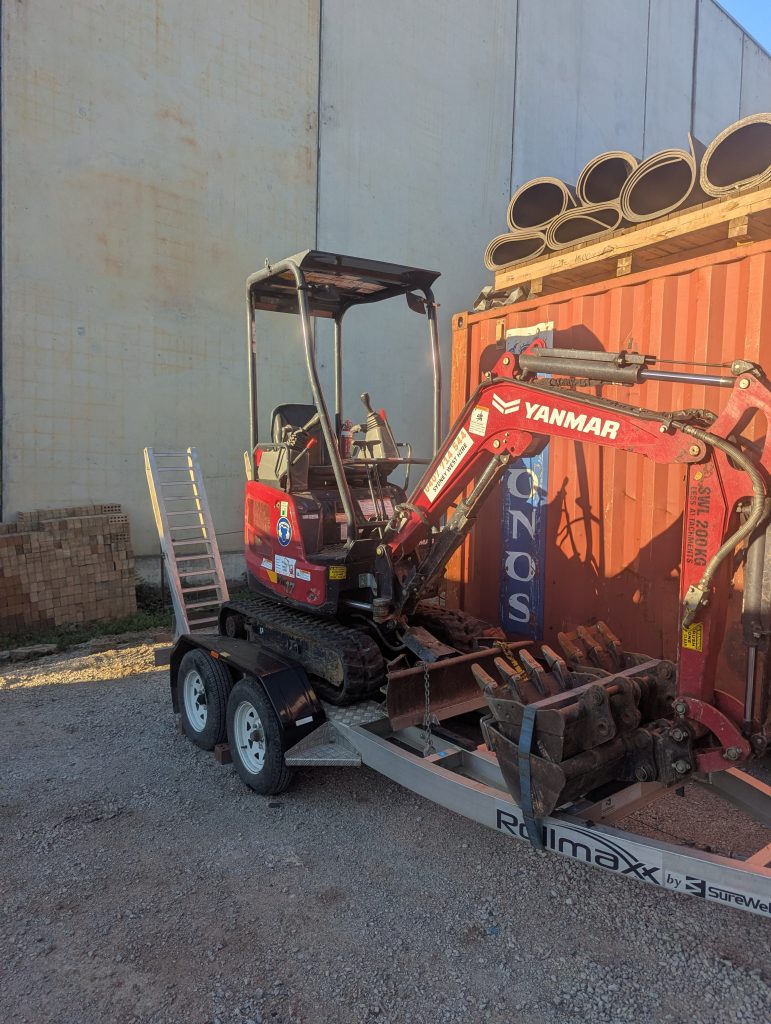
In Australia, you must have a current driver’s licence (P platers are accepted) to transport a mini excavator on a trailer and must comply with all road rules. Ensure you understand the weight limits and restrictions of your vehicle and tow bar. For machines over 9 tonnes, a higher-class or special licence will be required.
Conclusion
Mini excavators are highly versatile machines that can be safely and effectively used for a wide range of projects when operated correctly. As a beginner, it may feel confusing and overwhelming when operating a mini excavator but by understanding the controls, following safety guidelines, and practicing basic movements, beginners can quickly gain confidence and control.
Thanks to Rhinox, we have attached some videos that may be helpful for you.
Basic controls: https://www.youtube.com/watch?v=zb9D-TVtyT8
How to dig a trench: https://www.youtube.com/watchv=p4SWKkwpAfg&list=PLXuB93INOCwnwCeCKNiho_mgcSHpS6Jkv&index=3