
Excavators are a very versatile machines, their multiple attachments make them the perfect machine for most jobs. From digging trenches and drilling post holes to breaking concrete and shaping landscapes, the right attachment can improve efficiency, accuracy, and safety on site. Whether you’re a first-time hirer, a DIY homeowner, or a small contractor, understanding what each attachment does will help you choose the right tools for the job and get the most out of your excavator hire. Below, we break down the most common mini excavator attachments and explain exactly what they’re used for.
1.General Purpose Bucket
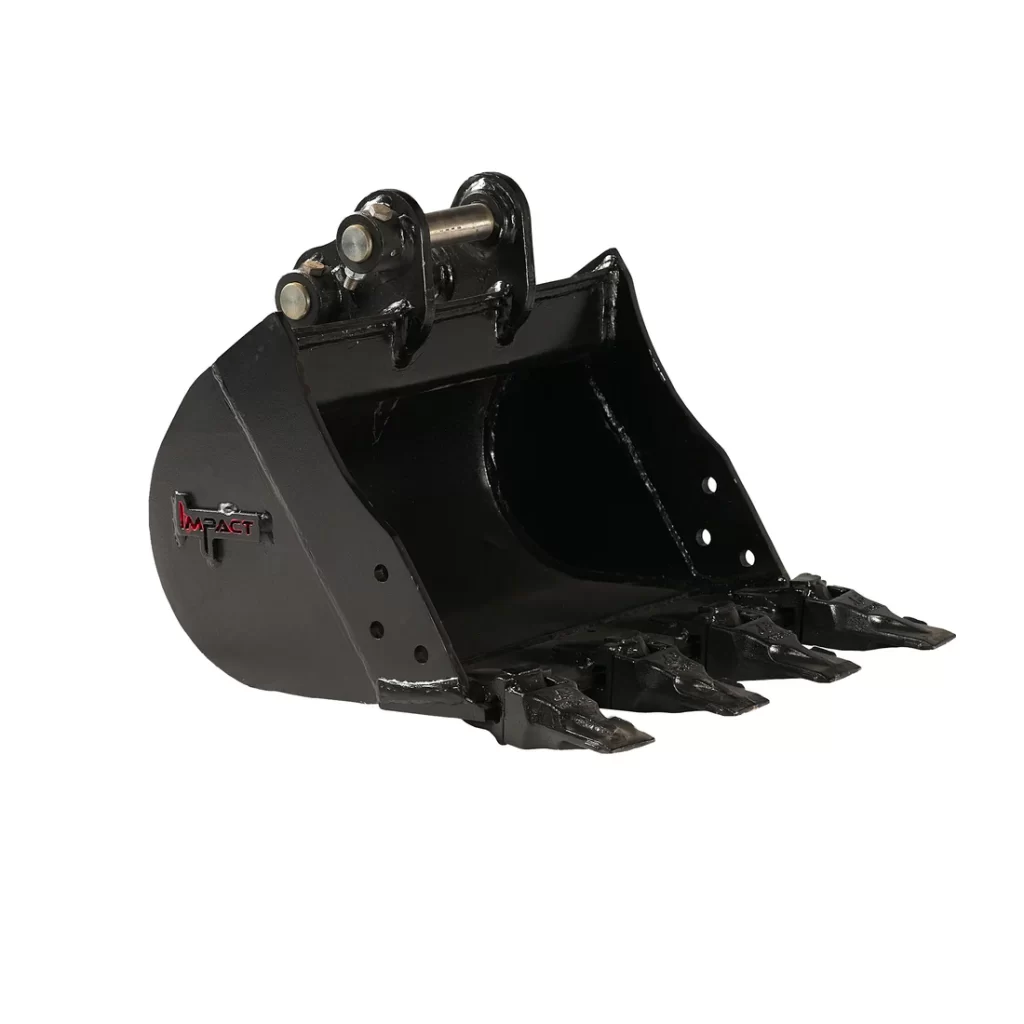
The GP bucket is the most commonly used attachment. It’s designed for general digging, trenching, and moving soil, sand, and clay. These buckets generally come with the excavator when you hire it.
2. Ripper tool
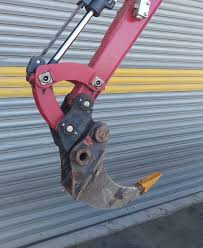
The ripper tooth is a single-point attachment designed to break up hard or compacted ground before excavation. It is commonly used to tear through tough surfaces such as tree roots, hard clay, and compacted soil, making digging easier and more efficient.
3. Auger series
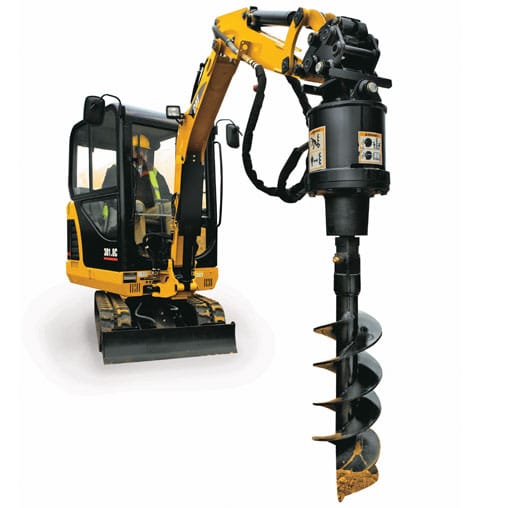
The auger attachment is designed to drill clean, precise holes in the ground. It is commonly used for fencing, footings, and tree planting. Augers are available in a range of sizes, typically from 100mm to 900mm, allowing you to choose the right width for your job.
Here is a helpful video from CamMcMaster on how to operate an Auger.
4. Rock breaker
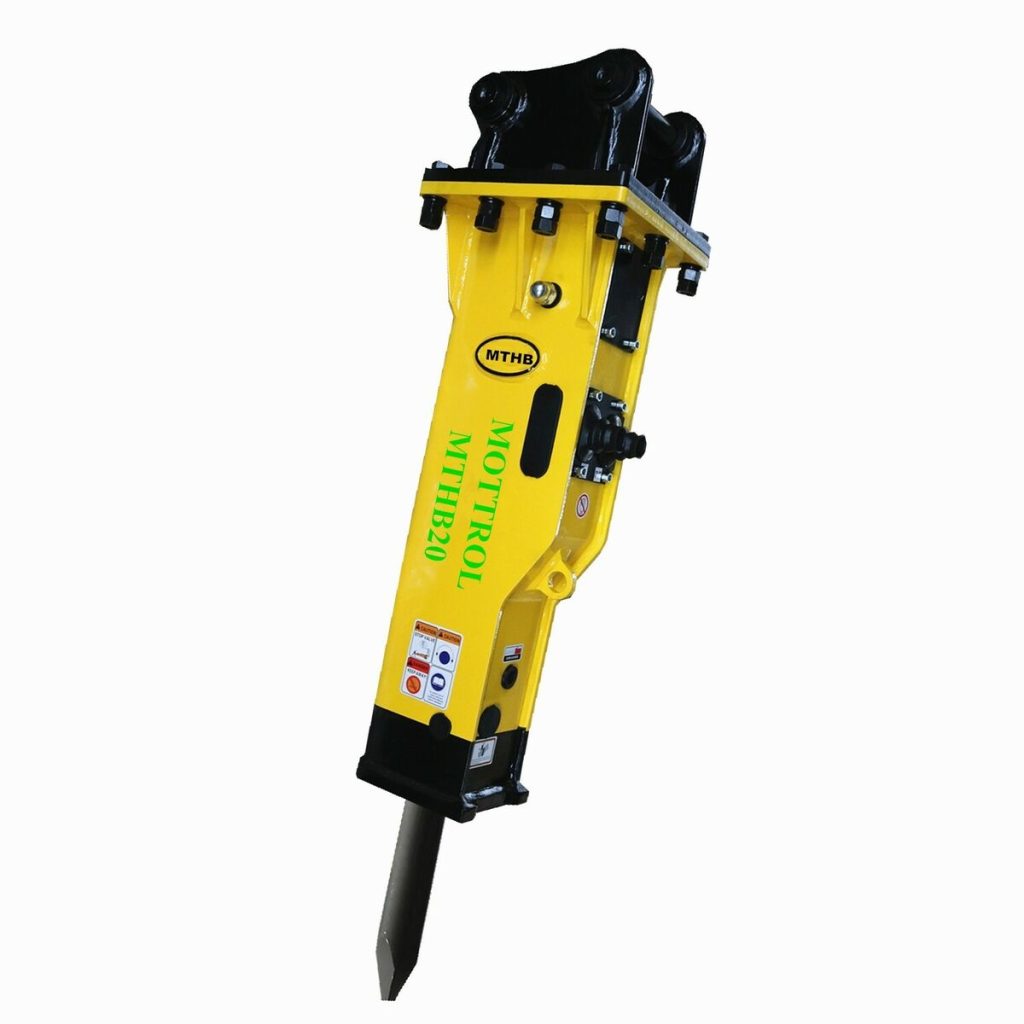
The rock breaker, also known as a rock hammer, is a hydraulic attachment used for breaking hard materials. It delivers repeated, powerful impacts to break up concrete, rock, asphalt, and other tough surfaces. Rock breakers are commonly used for demolition and excavation work where standard digging attachments are not effective.
Here is a helpful video from CamMcMaster on how to operate a Rock breaker.
5. Grabber
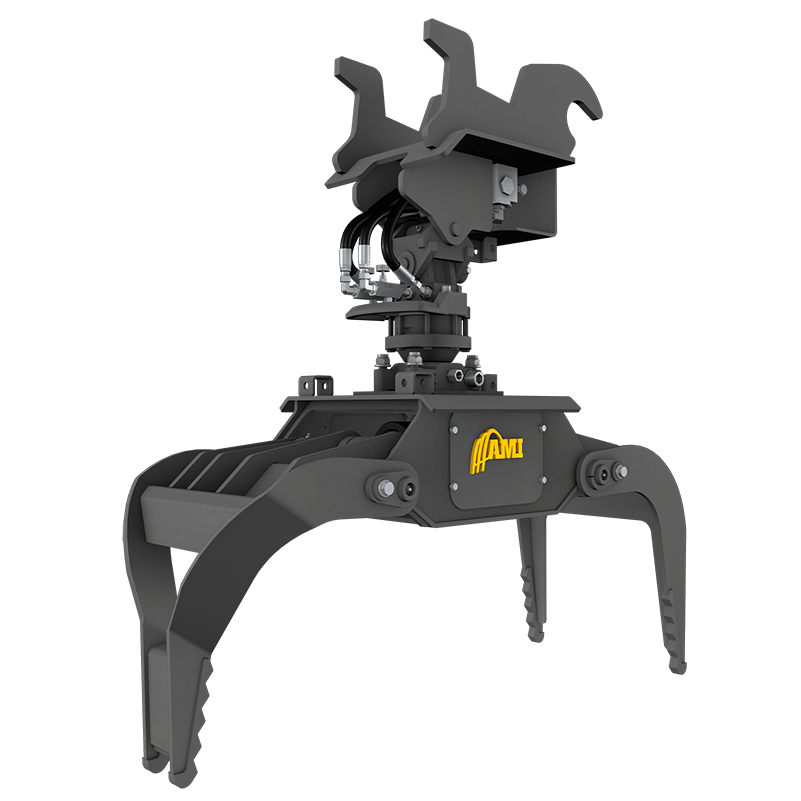
The grabber is a hydraulic attachment used for lifting, moving, and sorting materials such as logs, rocks, rubble, and demolition debris. It is ideal for site clean-ups, landscaping, and handling materials that are difficult to move manually.
6. Thumb Attachment
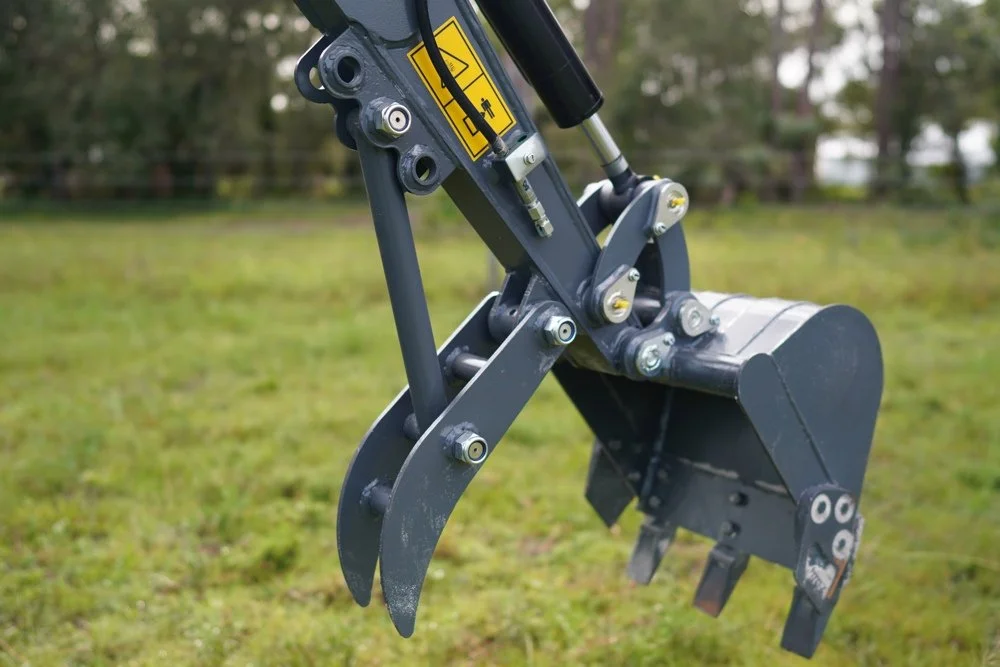
The thumb attachment works in combination with the bucket to grip and hold objects like rocks, timber, pipes or rubble. It improves control when handling materials and makes lifting, sorting and demolition tasks safer and more efficient.
7. Sieve / Skeleton Bucket
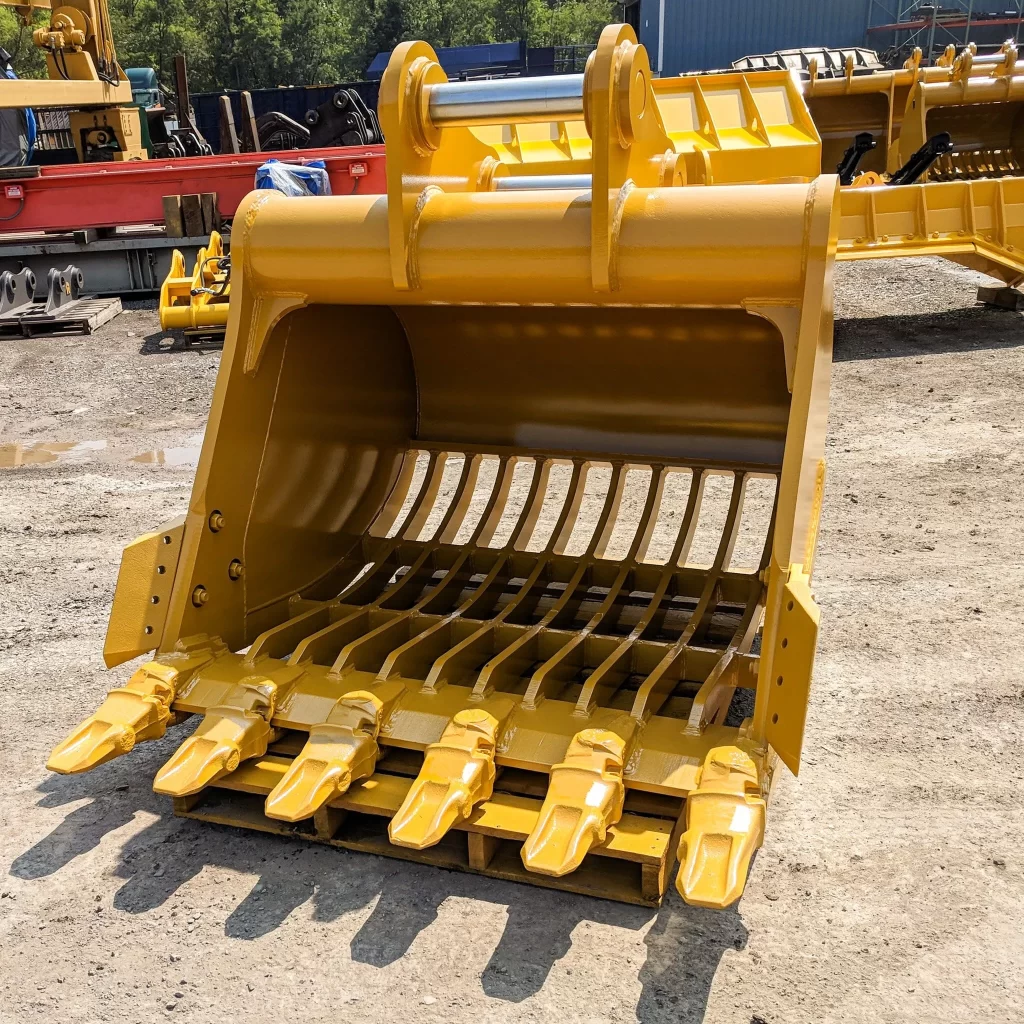
This bucket separate rocks and debris from soil, making it ideal for landscaping, site clean ups and recycling material.
Here is a video from Rhinox that explains how to use this attachemnt.
Now that you know the basic attachments commonly used with mini excavator, always ensure each attachment is compatible with your machine, correctly fitted and securely locked before use. Whether is a general purpose bucket for digging, a ripper for breaking hard ground, an auger for drilling holes or a grabber for lifting debris, choosing the right attachment for the job will make your work faster, safer and more efficient. If you’re unsure how to operate any attachment, ask for a quick demonstration, it can save time, reduce damage and keep your project on track.
At Sydney West Hire we offer a variety of attachments, Rock breakers, General purpose buckets as well as a range of different sized Augers. Get in touch with Sydney West Hire today to get the right attachment for your job!
Thanks to Rhinox, we have attached some videos that may be helpful for you,
Changing excavator attachments: https://www.youtube.com/watch?v=KzcnvZ3sJw&list=PLXuB93INOCwnwCeCKNiho_mgcSHpS6Jkv&index=13